Happy Tooth: A Cheerful, Practical Embroidery Design Worth Your Thread
First Impressions: Friendly, Not Frivolous
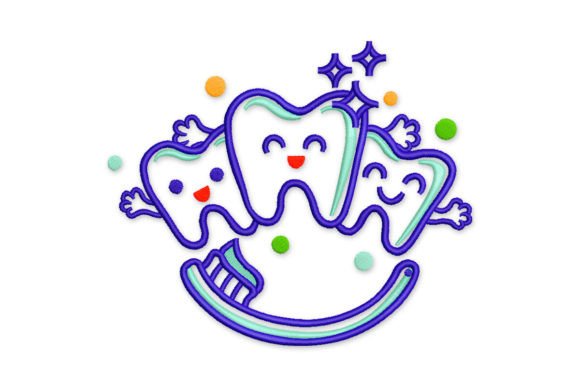
When I opened Happy Tooth for the first time, I wasn’t smiling because it’s cute—I was smiling because it’s *clear*. The design immediately reads as joyful and approachable, but without visual noise or overcomplication. It’s not cartoonish in a way that ages poorly, nor is it so minimal it loses personality. The smiling tooth shape is well-proportioned, with gentle curves and balanced negative space—critical for clean stitch-out on real fabric. As a designer who regularly selects embroidery files for client work and small-batch merchandise, I appreciated how quickly this one communicated its intent: positivity, lightheartedness, and care. That matters when you’re building trust through handmade product.
A Real-World Test: Stitching It on a Linen Kitchen Towel
Last week, I used Happy Tooth to embroider a set of linen tea towels for a local boutique’s spring collection. Why linen? Because it’s unforgiving—loose weave, subtle texture, and zero stretch. If a design struggles here, it’ll struggle elsewhere. I hooped medium-weight cutaway stabilizer, chose soft cotton thread in mint and warm white, and ran the file at 75% speed. The result? Crisp satin-stitched edges around the smile, even fill in the tooth body, and no puckering—even across the towel’s natural drape. Customers loved the warmth it added to their kitchen decor. One even emailed asking if we’d do matching oven mitts. That’s the kind of quiet resonance Happy Tooth delivers: not loud, but memorable.
Where It Shines (and Where to Pause)
Happy Tooth works beautifully on custom apparel like sweatshirts and tote bags—especially when placed front-and-center on chest or pocket areas. Its open shape avoids heavy fill density, so it breathes on thicker fabrics without stiffness. On baby onesies or nursery pillows, it reads sweet without being saccharine. For Etsy sellers offering personalized gifts, it’s an easy upsell: pair it with a monogram or tiny heart, and you’ve got a cohesive, thoughtful item.
That said, proceed thoughtfully on curved surfaces like caps—test hoop placement first, since the rounded crown can distort smile symmetry if the design sits too high or low. Also, avoid using it on very thin fabrics (like lightweight rayon challis) without tear-away stabilizer underneath; the satin stitch outline needs support to stay sharp. And while it holds up well on dark fabric, skip black-on-black combos—the detail relies on contrast to read clearly.
Design Integrity in Practice
What makes Happy Tooth stand out isn’t just charm—it’s structural intelligence. The smile curve avoids tight corners that could snag or fray after washing. There are no micro-details (like individual tooth ridges or fine eyelashes) that vanish in stitching or demand ultra-fine thread. This means fewer re-hooping moments, less thread breakage, and more consistent results across machines—from mid-range home embroidery units to commercial multi-head setups. For craft business owners scaling production, that reliability saves time and reduces waste.
Customer Trust Starts With Clarity
I’ve seen too many “cute” embroidery files fall flat once stitched: blurry smiles, uneven spacing, or proportions that look off on actual fabric. Happy Tooth avoids those pitfalls. Its balanced layout translates cleanly into a finished product—whether it’s a hand-stitched patch or a digitally embroidered apron. That clarity builds buyer confidence. When someone orders a personalized gift from your shop, they’re not just buying thread and fabric—they’re buying intention. Happy Tooth signals that you pay attention to detail, understand material behavior, and respect the person receiving the item.
Smart Designer Moves Before You Stitch
- Always test on scrap fabric—especially if pairing with textured or stretchy materials like terry cloth or jersey.
- Check thread color contrast before final run: what reads well on screen may disappear on charcoal heather or navy.
- Review stitch density—not just for appearance, but for durability. High-density fills trap moisture; low-density runs risk showing stabilizer.
- Confirm hoop size compatibility—some versions of cheerful designs get cropped awkwardly if forced into smaller hoops.
- Inspect small details in your embroidery software: does the smile line hold weight at 80% scale? Does the tooth root taper naturally?
- Test in black-and-white mockups to gauge readability—this reveals hidden contrast issues fast.
- Use proper stabilizer: cutaway for knits, tear-away for stable wovens, and light fusible for delicate linens.
- Verify licensing before selling finished items or bundling Happy Tooth as part of a digital embroidery file pack—commercial use rights aren’t automatic.
Beyond the Stitch: Brand Fit and Gift Appeal
Happy Tooth fits naturally into wellness-themed shops, pediatric dental offices (with permission), baby boutiques, and even eco-conscious lifestyle brands—its simplicity reads as intentional, not generic. It’s not tied to a holiday or trend, so it stays relevant year-round. As a personalized gift, it adds levity without irony—perfect for new dentists, orthodontic milestones, or even playful “tooth fairy” keepsakes. For Etsy sellers, it pairs effortlessly with neutral palettes and natural fibers, reinforcing handmade authenticity.
Final Thought: Joy That Stitches True
Not every cheerful embroidery design earns its smile. Happy Tooth does—not because it’s perfect, but because it’s considered. It respects fabric, machine limits, and human eyes. Whether you’re stitching a single pillow cover for a friend or producing 50 embroidered patches for a craft fair booth, it performs with quiet consistency. In a market flooded with rushed digital downloads, that kind of thoughtful execution is rare—and valuable. If your next project calls for warmth, wit, and wearability, Happy Tooth is worth your needle time.