Toilet Paper Roll: A Playful Stitch That Works
As someone who’s stitched hundreds of designs for clients, Etsy shops, and boutique product lines, I don’t reach for “funny” embroidery files lightly. Humor in machine embroidery walks a fine line—too literal and it flattens; too busy and it stitches poorly; too small and it vanishes on fabric. So when Toilet Paper Roll landed in my inbox, I paused—not because it sounded gimmicky, but because its simplicity felt intentional. This isn’t just a novelty doodle. It’s a compact, expressive character design that leans into its theme without over-explaining itself.
First Impressions: Charm Without Clutter
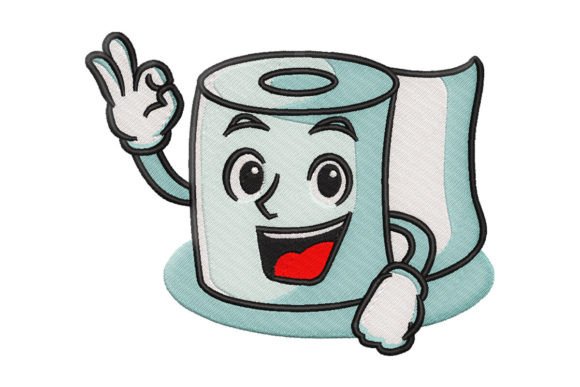
The Toilet Paper Roll embroidery file reads instantly: soft curves, subtle facial expression (just enough to wink, not smirk), and clean silhouette. There’s no extra text, no cartoon speech bubble, no exaggerated unrolling paper—it’s distilled to its friendliest essence. That restraint is what makes it versatile. I opened it in my digitizing software and immediately noticed balanced stitch density: generous satin-stitched edges for definition, thoughtful fill-stitch zones for body volume, and minimal running-stitch detail where it counts (like the gentle curve of the roll’s edge). No tiny, fragile loops or thread-trap corners. That tells me the digitizer understood real-world stitching—not just vector art.
A Real Project Test: The Towel That Got Noticed
Last week, I used Toilet Paper Roll on a set of organic cotton tea towels for a local bath-and-body shop’s holiday pop-up. We hooped medium-weight tear-away stabilizer, chose matte cotton thread in warm white and soft grey, and stitched it centered on the lower corner—about 3.2" wide. Result? Crisp, dimensional, and undeniably cheerful. Customers didn’t just smile—they paused, pointed, and asked, “Is that *really* toilet paper?” That moment confirmed something important: Toilet Paper Roll doesn’t shout. It invites. It fits seamlessly into bathroom-themed merchandise without leaning into bathroom clichés (no rubber ducks, no “#1” puns). It feels handmade, not mass-produced—exactly what shoppers seek in small-shop products.
Where It Shines—and Where to Pause
Toilet Paper Roll performs reliably across common craft business applications:
- Tote bag design: Clean at 4–5" wide on canvas or duck cloth—holds shape well, no puckering.
- Sweatshirt embroidery: Works best on mid- to heavyweight fleece; avoid ultra-thin French terry unless you double up stabilizer.
- Embroidered patch: Easily converted to an applique design with clean cutaway edges—ideal for iron-on or sew-on backing.
- Baby embroidery: Gentle theme, low stitch count, no sharp angles—great for onesies or burp cloths (just confirm thread safety if gifting).
- Holiday embroidery: Surprisingly effective on “stocking stuffer” towels or mini aprons—adds lighthearted charm without seasonal baggage.
But here’s where attention matters: On dark fabric, contrast depends heavily on thread choice—test light greys or ecru, not stark white. On textured fabrics like waffle-weave towels, reduce top tension slightly and use a medium cutaway stabilizer to keep details legible. And while it’s compact enough for a 4x4 hoop, don’t push it smaller than 3" wide—those subtle facial cues soften fast below that scale.
Design Integrity Meets Commercial Sense
For Etsy sellers and craft business owners, Toilet Paper Roll adds quiet professionalism to playful categories. It elevates a basic kitchen towel from “functional” to “curated.” It gives a baby gift set personality without veering into kitsch. And because it avoids dated trends (no meme references, no forced slang), it stays fresh across seasons—making it smart inventory for small shop product lines.
I’ve seen too many “funny” embroidery files undermine trust: overly dense stitching that pulls fabric, inconsistent lettering that blurs on dark backgrounds, or licensing gaps that trip up commercial users. Toilet Paper Roll avoids those pitfalls—not by being sterile, but by being considered. Its proportions respect hoop limits. Its stitch paths flow logically. And its visual weight holds up in both color and black-and-white mockups (a must for digital product previews).
Practical Designer Notes Before You Stitch
Before adding Toilet Paper Roll to your next project—or listing it as part of a digital embroidery bundle—do these five things:
- Run a test on scrap fabric matching your final substrate (especially if using stretchy knits or lightweight linen).
- Check thread color contrast on both light and dark backgrounds—some greys read flat on charcoal; try heathered or oatmeal tones instead.
- Review stitch density in the roll’s curved edge—if your machine hesitates there, consider reducing density by 5–8% in fill areas only.
- Confirm hoop size compatibility with your intended application (e.g., caps require precise placement—this design works best front-panel or on flat surfaces like pillow covers).
- Verify licensing terms—since this is a machine embroidery design, ensure resale rights cover both finished handmade products and digital embroidery file bundles if you’re a digital product seller.
One last note: Don’t skip the stabilizer step—even on stable cotton. A light tear-away keeps the roll’s roundness crisp and prevents shadowing on the back. And if you’re pairing it with text (like “Bathroom Break” or “Roll With It”), leave at least ½" breathing room. This design earns attention by standing alone—not competing.
Final Thought: A Small Design With Real Utility
In a category full of overdesigned bathroom motifs, Toilet Paper Roll stands out by doing less—and doing it well. It’s not a joke you explain. It’s a detail you recognize, appreciate, and remember. Whether you’re stitching personalized gifts, building a cohesive line of home goods, or expanding your digital embroidery assets, this file delivers consistent, confident results. It reminds us that great embroidery design isn’t about complexity—it’s about clarity, care, and knowing exactly where the needle should land.